since 1995
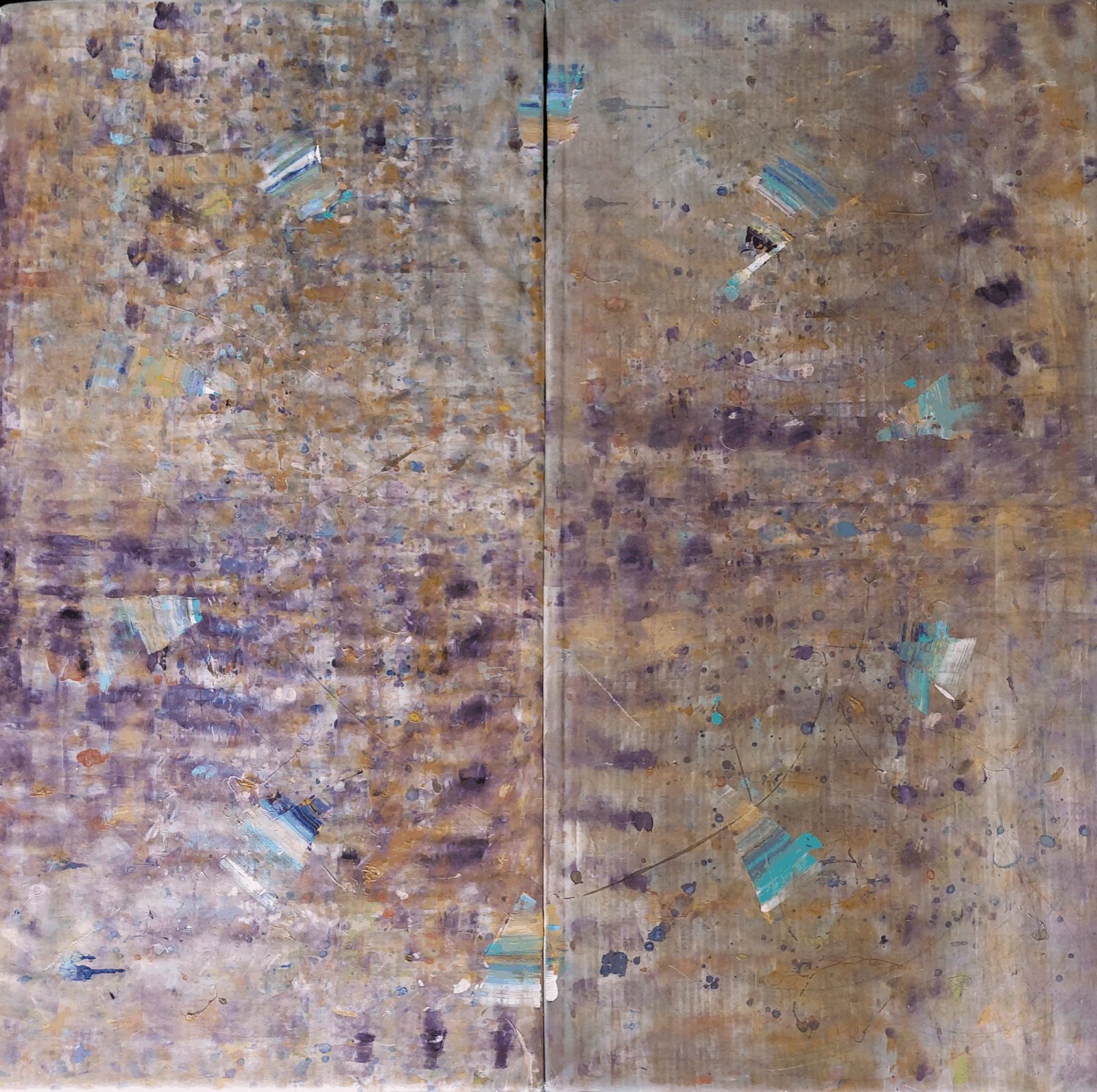
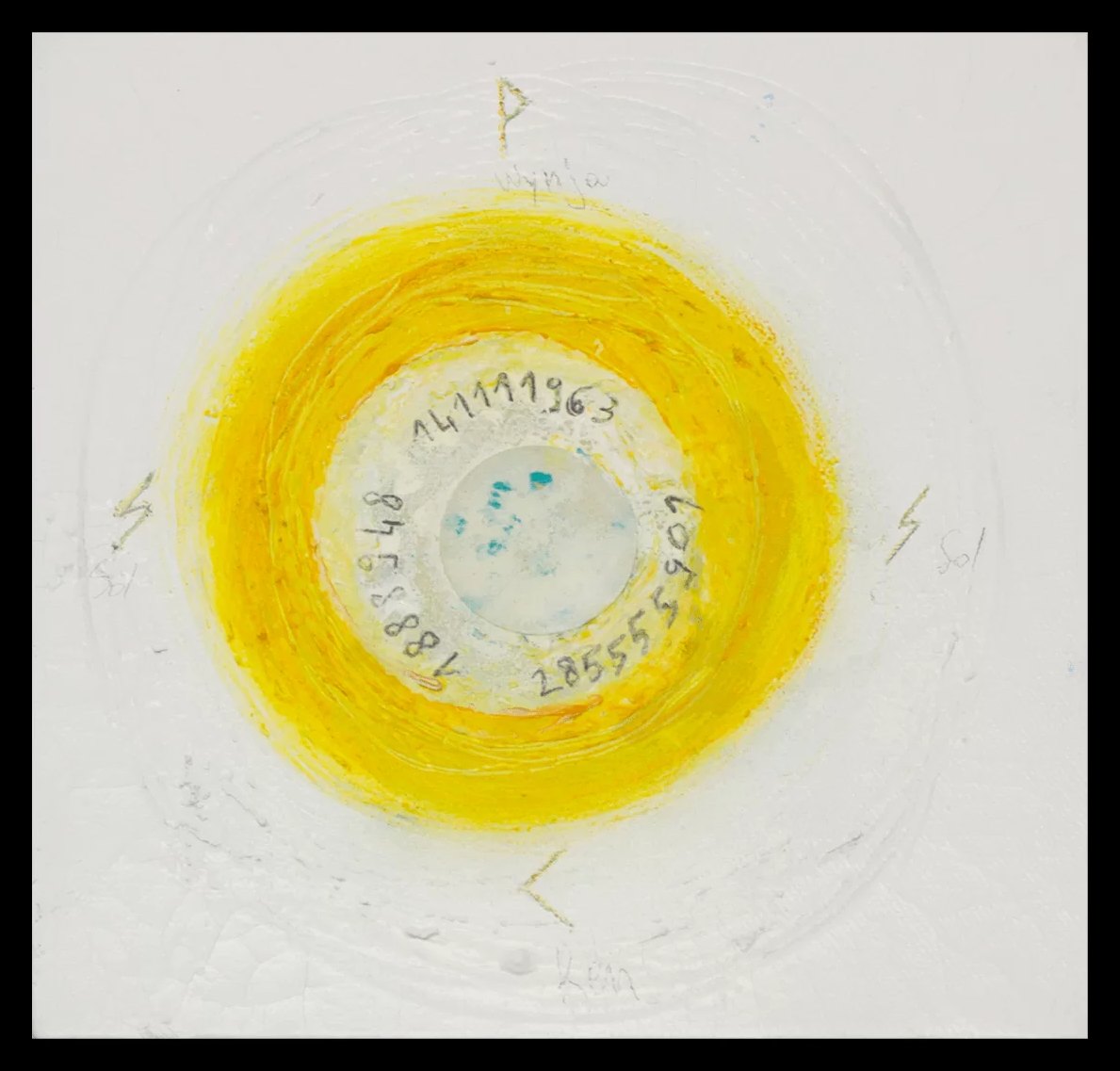
Begun in 1995, this phase has never been completely exhausted within painting: it remains latent and necessary, ready to re-emerge whenever the work calls for scraping and skimming away the superfluous to come closer to substance, to depth, to the origin: all the way back to the virgin canvas.
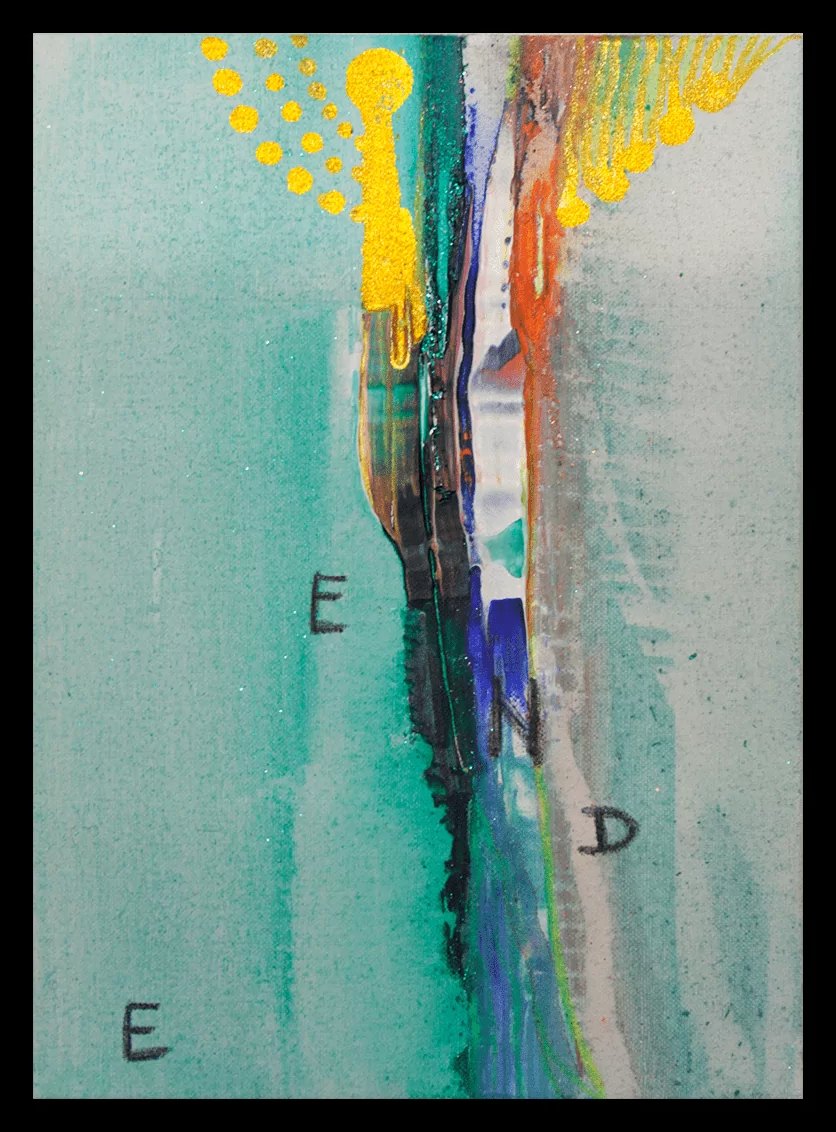 Visual Poetry2007 – ongoingTavole Parolibere · Post-it ArtDiscover the series →
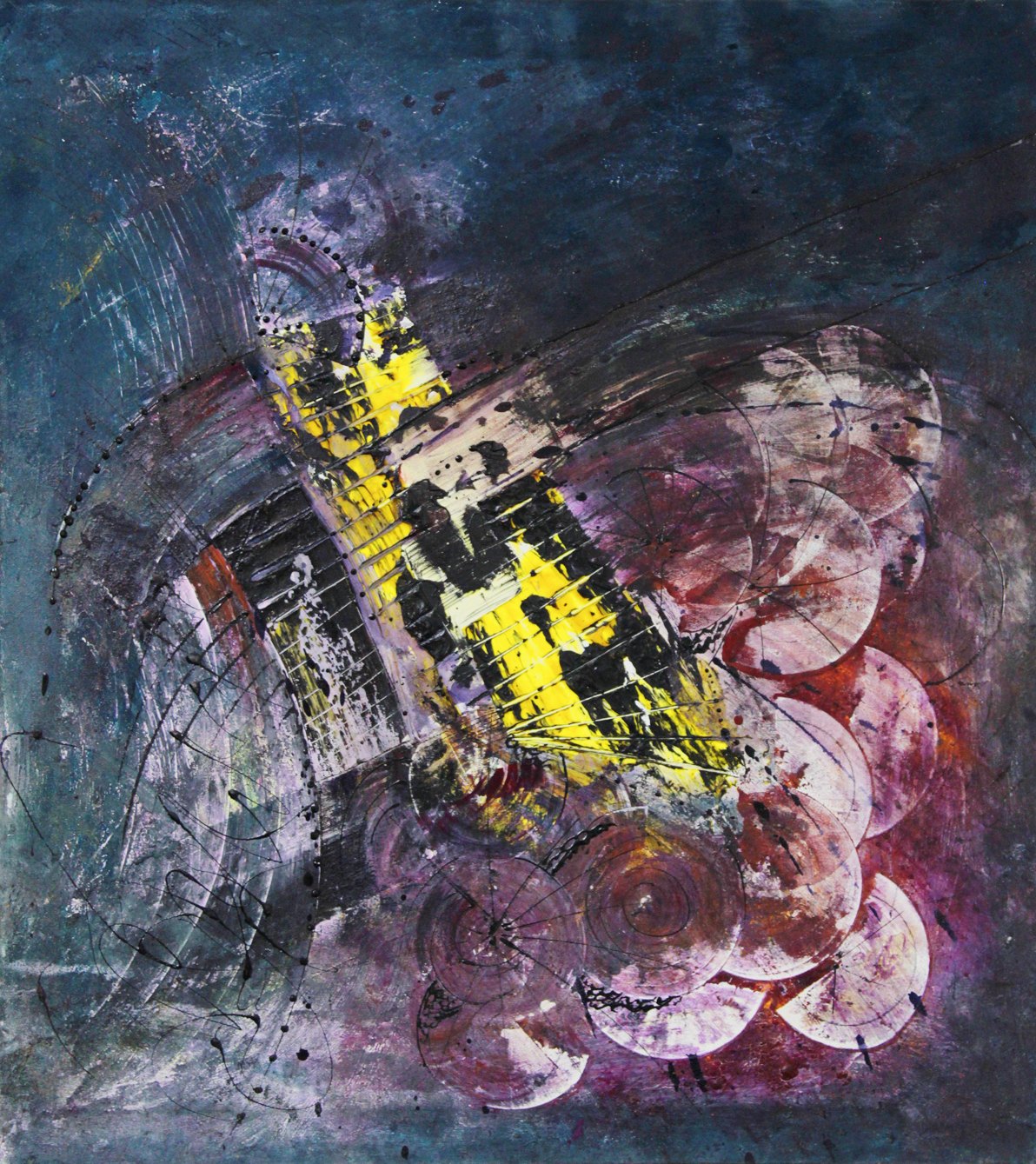 I Acentric Phasesince 1995Vicoli Verticali · Circo-StanzeDiscover the series →
Painting is an ancient passion. Grattage is the technique of the I Acentric Phase, or A-centr-ism, initially understood as the absence of centralising or limiting “-isms”.
Developed within Surrealism by Max Ernst and later explored, in different forms, by other twentieth-century artists, grattage becomes in my research something more than a painting technique: a tool of subtraction.
At first it was also my way of passing through and transforming emotional contents left suspended, scraping them away until I returned to the virgin canvas. I chose it to express a fundamental existential distinction: neither this nor that, since our knowledge is acquired and limited. Scraping, removing, passing through the surface thus also becomes an inner gesture, from which arises the order within which clarity could later express itself through other languages too, up to the art of light, or Light Art. The surviving works of the I Acentric Phase are those that were not burned or purified by fire.
I have never wanted to exhibit or “sell pain”. The point is not to deny what has been lived, but to pass through it until it no longer occupies the whole field of creation. From this first pictorial territory two main series emerged: Circus-Stances (Circo-Stanze) and Vertical Alleys (Vicoli Verticali).
The research then extends to the word, with Visual Poetry, and to the relationship between water, matter, sign and intention, with Acqua*Viva Imprinting, before light opens the passage to Phase II.
The term Acentrism derives from the formulation a-centr-ism, a “name-non-name” that joins the idea of the absence of a centre to the suffix “-ism”, used here critically in relation to centralising systems and classifications. This is why “acentric artist” is an oxymoron: acentric is an adjective that neutralises itself in every ready-made definition. Whoever works acentrically manifests as a non-artist, an outsider: “in the world, but not of the world”, including the art world.
“… Space too, like eternity, has no limits; it is the infinite, with neither beginning nor end, the circle whose centre is everywhere and whose circumference is nowhere”OM Aïvanhov