
33 hours of focused painting · 7 performances · 77 questionnaires
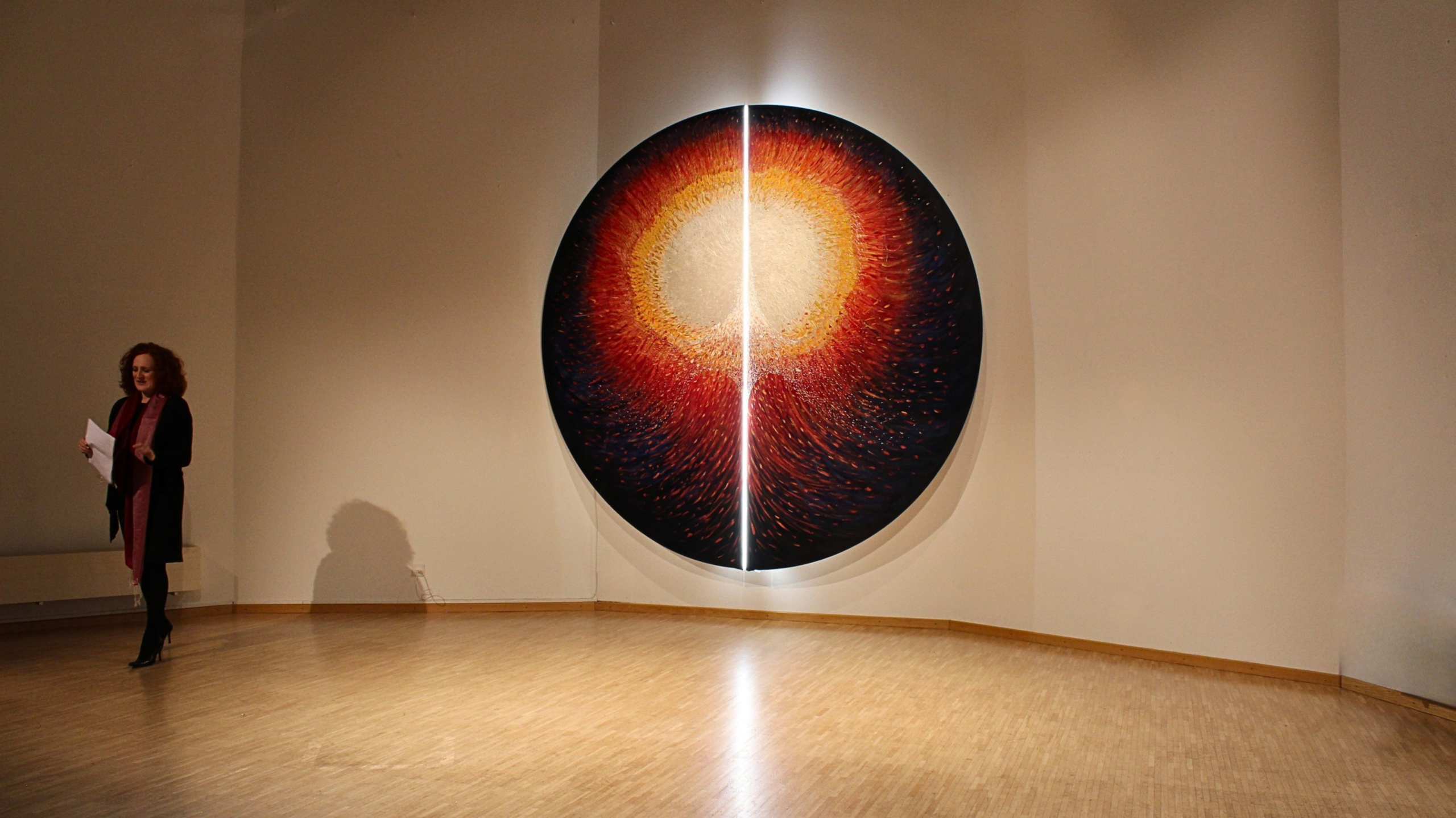
Living Fulcrum was created on site at the Elisarion through 33 hours of focused painting, in the four days preceding the performances of 14–16 February. The process was preceded by years of practice centred on presence, concentration, eurythmy and the observation of mental and emotional processes.
During the painting process, a single creative intent and a single emotional state were deliberately maintained: calm. The work therefore became the material centre of an enquiry into whether artistic intention can remain perceptually active within the completed work.
The project included an experiment on objective perception using a specific technique for objective, or hyperlucid, vision.
Before free interpretation could take over, the audience was guided through a short structured practice of breathing and attention intended to interrupt, even momentarily, the automatic chain of associations, memories, preconceptions and interpretations.
The question was whether the emotional state deliberately maintained during the creation of the work could find perceptual resonance in those who encountered it.

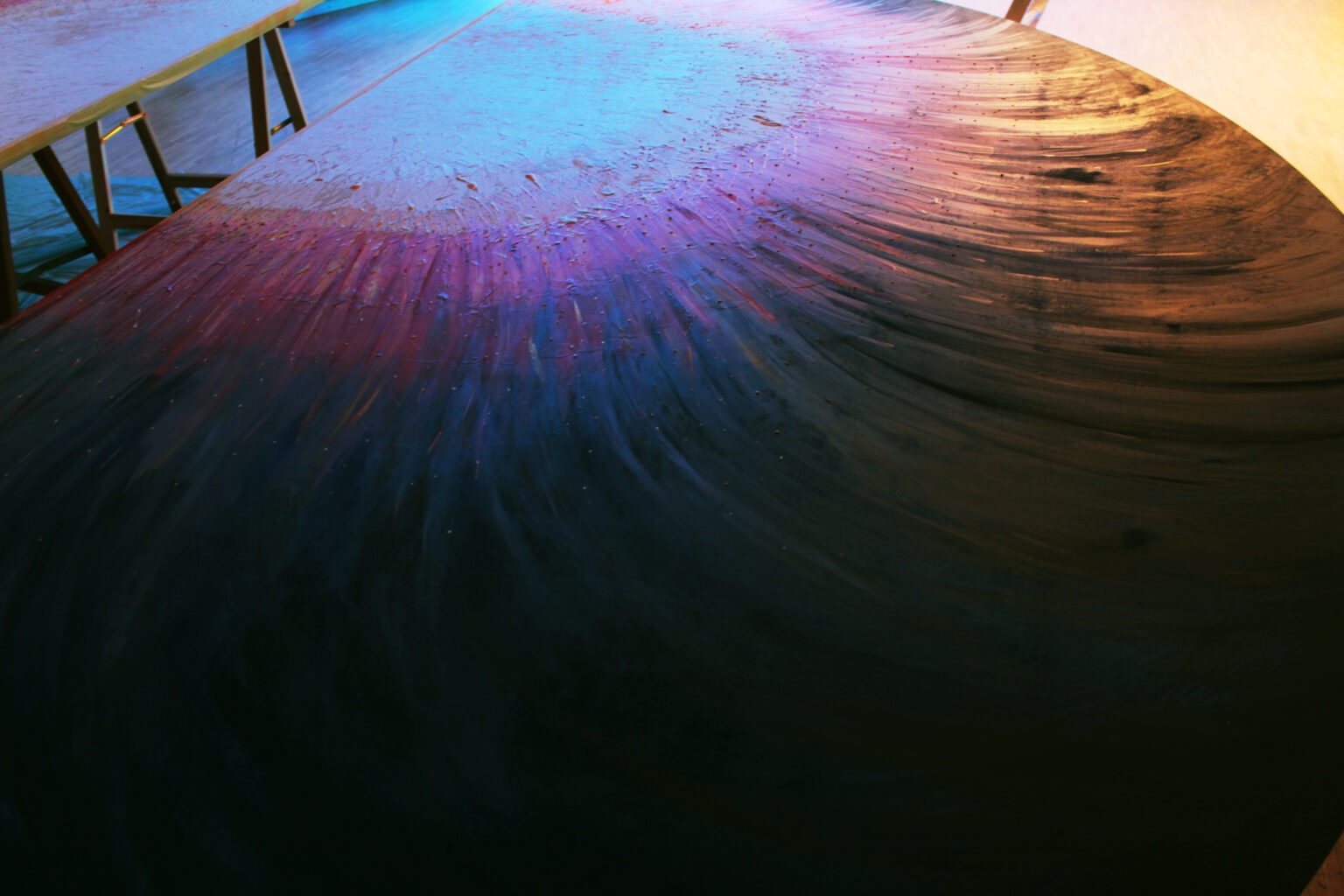
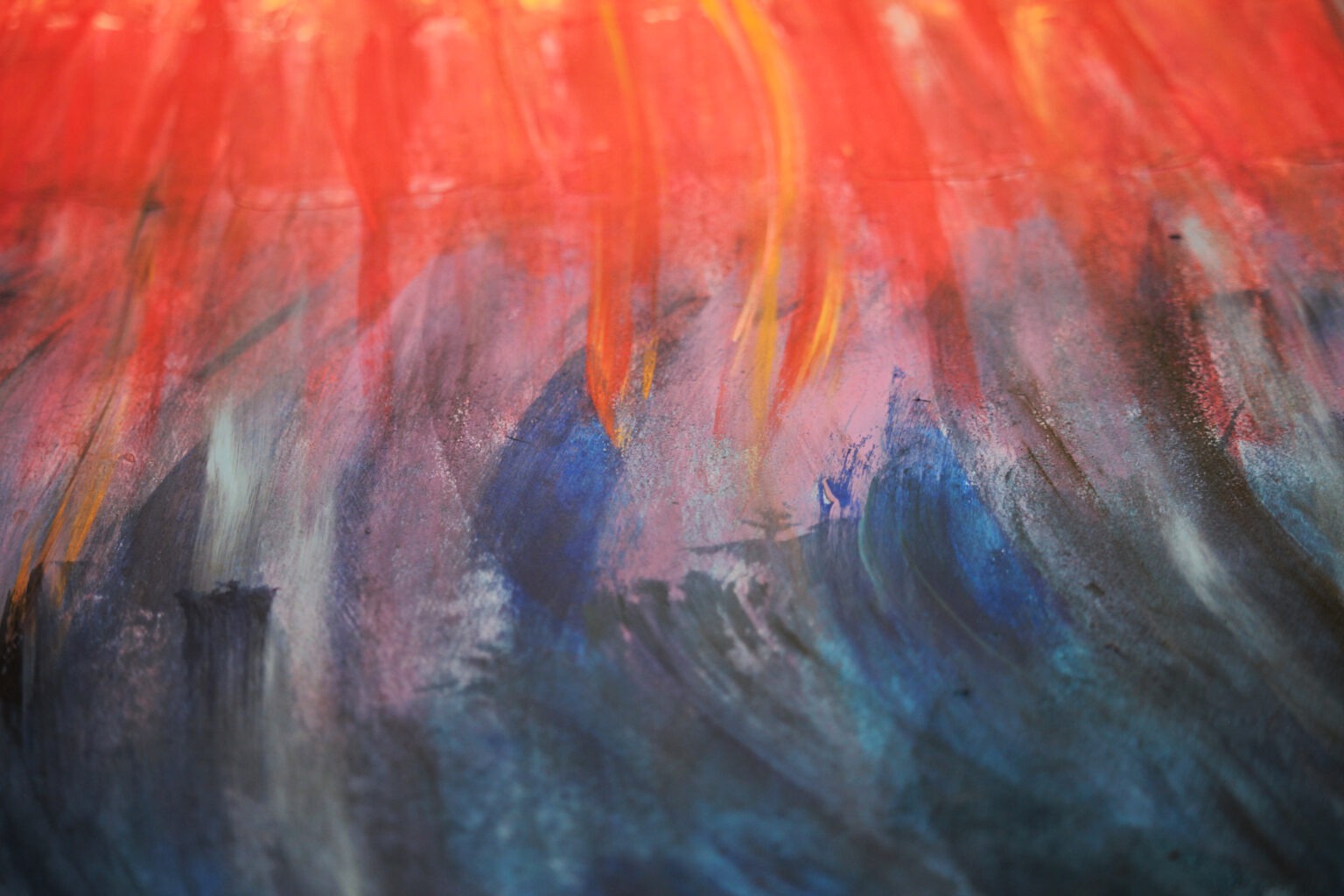
Painting, eurythmic movement, voice and breathing were conceived as components of a single perceptual device.
Giovanna Galimberti’s Floating Configuration, through eurythmic gesture, contributed to configuring and containing the perceptual space. Nadia Radici’s InCanto, through voice and sound, engaged the bodily dimension of listening and feeling.
Painting, light, breath, movement and voice therefore acted together to prepare a temporary condition of receptive presence.
At the end of each performance the audience filled in an anonymous questionnaire. Only while the questionnaires were being collected did the artist declare the emotion she had maintained while painting: calm. Immediately afterwards, the answers were read aloud, anonymously.
Across the seven performances, calm was the emotion most frequently selected.
The free comments also repeatedly evoked closely related states such as peace, serenity, tranquillity, relaxation and inner peace.
The result is therefore read as a clear perceptual convergence around the same affective field, rather than as an absolute identity between individual experiences.
The principal limit of the experiment concerns language. Translating a perceptual and emotional experience into a single word necessarily reduces its complexity.
The word calm gathers different nuances that, taken together, point towards a shared affective field expressed also through words such as peace, serenity, tranquillity, relaxation and inner peace.
The breathing exercise was not conceived as relaxation or as a traditional meditation. Seven circular and rhythmic breathing cycles alternated open and closed eyes in order to create a short interruption in habitual perception.
The aim was to establish a brief threshold in which seeing could precede recognising and naming: a moment before the present image was replaced by the accumulated associations of memory — the “eyes of one’s own past”.
Objective vision does not emerge here as an ordinary or guaranteed state, but as a possibility that requires preparation, practice and precise conditions.
On the artist’s side, these conditions involved sustained attention, concentration and the intentional maintenance of a coherent creative and emotional state throughout the making of the work.
On the viewer’s side, they involved a deliberately prepared context: painting, light, eurythmic movement, voice and the hyperlucid breathing exercise.
Across the seven performances, a clear convergence emerged between the emotional state maintained during creation and the affective field expressed by the audience.
The experiment therefore suggests that objective, or hyperlucid, vision may become practicable, at least temporarily, when these conditions are consciously prepared and sustained.