

The artwork as a perceptual field in the ART OF SPIRIT
When we stand before an artwork, we rarely receive a “naked” image. Our gaze is always inhabited: crossed by memories, culture, judgements, emotions and fragments of our biography. In that moment, we never encounter a form alone; inevitably, we also encounter ourselves.
The image accompanying this article is a digital artwork I created in 2010, Same Gaze, at the Same Time, from the series Clockwork Bubbles. The work already arose from a reflection on subjective perception, synchronicities and those instants of truth in which, while remaining distinct individuals, we may intuit a deeper form of unity.
From this awareness comes a question that guides my research: is it possible to suspend the mind’s automatic impulse to interpret everything it sees? Can we learn to approach the artwork not only as an object to be observed, but as a field to be received?
This inquiry developed through two experiments that I now recognise as a fundamental axis of my path: the before and the after of the gaze.
The Before: Aesthetics of the Imperceptible
In 2019, at the Lac o Le Mon Foundation in Apulia, within the cycle curated by Emilio Fantin, I explored what may happen before the visual encounter with the work.
The work was not shown. Participants were given only its title and concept; the image remained hidden.
The exercise was an invitation to deep listening: to close the eyes, breathe through the heart and expand one’s inner field, allowing signs, lines, dots or configurations to emerge. The work used as target was One Way, Wu Wei.
Some participants, although experiencing the practice for the first time and without specific training, returned in their drawings elements related to the structure of the actual work.
I do not consider these results definitive scientific proof, but indications of an open inquiry: can the artwork be understood as an informed field, capable of being perceived beyond physical sight alone?
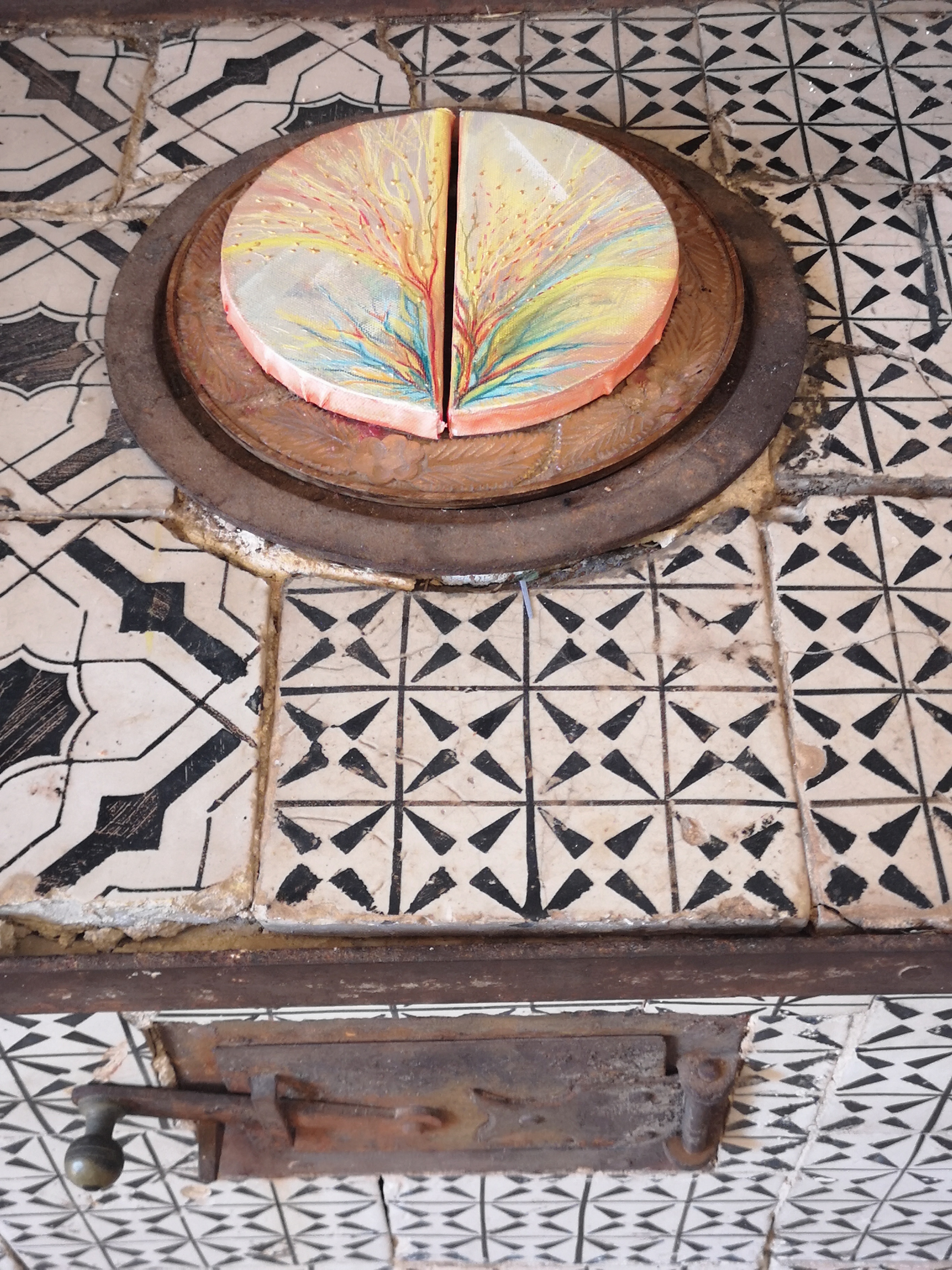
The after: the experiment on objective art
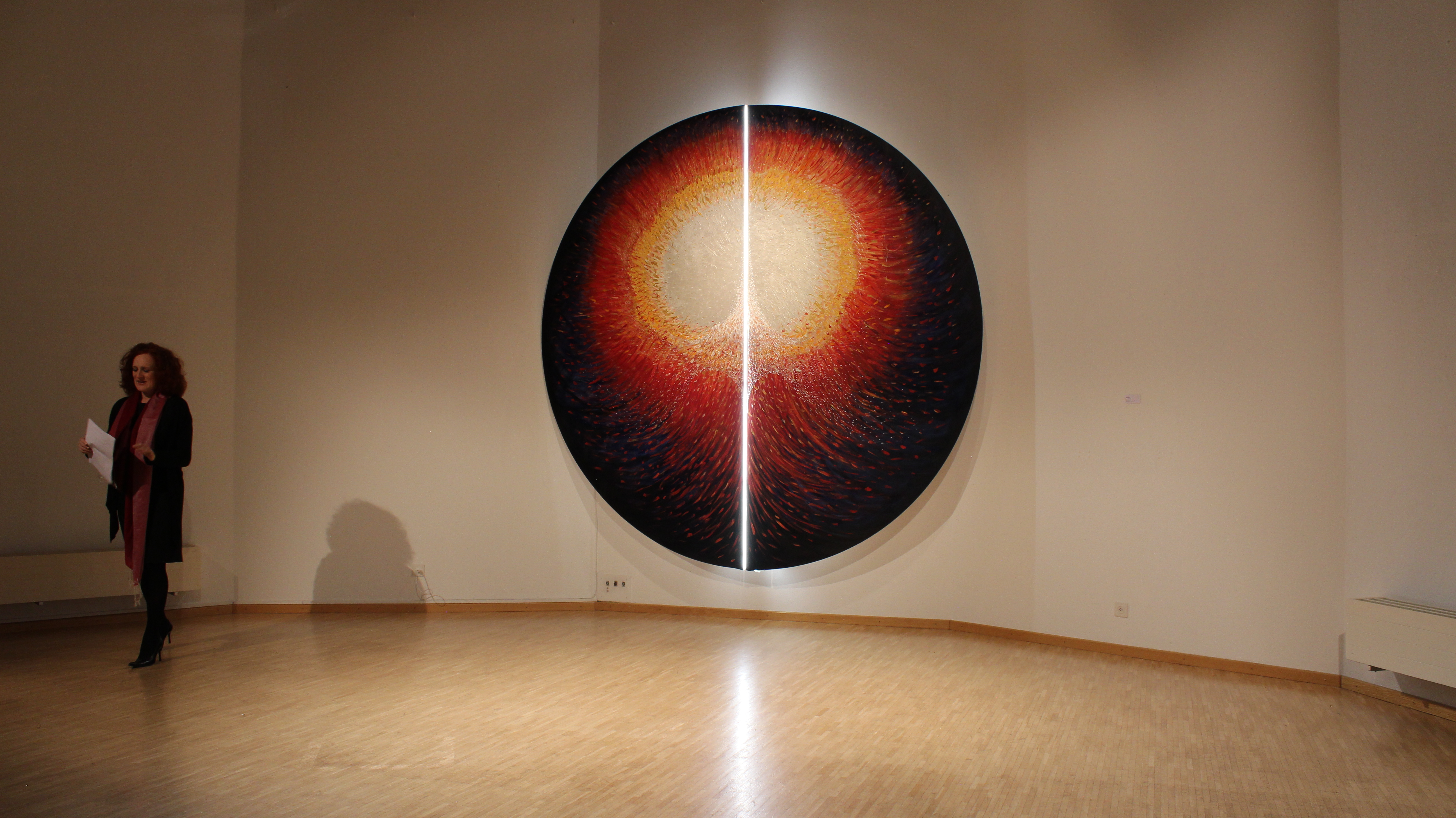
In 2020, at the Centro Culturale e museo Elisarion in Minusio, in collaboration with the Department of Culture of the Municipality of Minusio, the research shifted to the after of the gaze. In this case, the public encountered a visible work – Living Fulcrum – yet the question changed direction: does what I see truly belong to the work, or to my own projection?
In dialogue with Gurdjieff’s reflection on objective art, the experiment investigated whether a work created with a precise intention may generate in the viewer a specific and recognisable perceptual quality, beyond personal preference alone.
Beyond the physical eye
In both cases, the work ceases to be a simple aesthetic object and becomes a device of awareness. I am not interested in spectacularising extraordinary faculties, but in questioning perception as an educable faculty.
There are organs of knowledge that do not coincide with the physical eye: vigilant attention, listening to the body, receptive imagination, intuition and the sensitivity of the heart.
The ART OF SPIRIT moves within this territory. It does not propose a new sacred iconography or a codified style, but a posture of consciousness: a way of creating, looking, and receiving from a state of integration between body, mind, and SPIRIT.
By this term, I do not mean a dogma or a confessional belonging, but the living principle of consciousness, breath and presence that orients the relationship between the visible and the invisible.
An open research
The next step will be to bring these questions into the digital space. The web will not be only a means of dissemination, but a diffuse laboratory: an experimental field in which to verify whether, and how, even at a distance, it is possible to enter into relation with a hidden work, a code or an image not yet revealed.
The experiment on objective art showed me that a clear intention, sustained throughout the creative act, can imprint itself on the work and reach the public. Beauty, then, does not reside only in the eye of the beholder: it may also dwell in the force of an intention made form.
Perhaps the artwork begins when the artist can maintain a presence so clear that it becomes perceptible beyond the subjectivity of the gaze.